
Frequently Asked Questions
Is the itinerary likely to change?
Click Here to Read More Click Here to Read More The southbound and northbound routes are split into 3 trips each, as detailed in The Trips. The reason we do this is because most people can’t get the time off to do the entire trip or just want to do a particular part of the route. Breaking the journey into different sections allows people to come and go at various points. There’s nearly always a mixture of people doing single sections of the trip along with some doing 2 or 3 – so there should be a good balance of old and new faces from one trip to the next. * Discounts apply if you’re booking more than one trip – please contact us for more information Click Here to Read More If the British FCO issue a warning to ‘avoid all travel’ to a particular area or country on our route we will take heed of this and make a contingency plan. At the time of writing there are no ‘avoid all travel’ restrictions in place for any of our intended route. We have researched our routes thoroughly and are continuously checking the situation with the British FCO, other travellers passing through, local and international media as well as out local contacts on the ground. We continually do the same once we’re on the road. Please note that we will not hesitate to change our route should we have any doubt about security whatsoever. It’s worth noting that many other overland operators run trips through countries in North, East & Southern Africa, the Middle East and Asia which are currently subject to some degree of FCO travel warnings. The coastal countries of West Africa are moving on from a troubled past and most are actively promoting tourism in places. There has never been a better time to visit the region! Click Here to Read More Please note that if you’re somebody who isn’t sociable, or somebody who easily takes offence, or somebody who thrives on confrontation and arguing, or somebody who struggles to accept other people’s views and approach to doing things – then this is not the trip for you! We usually attract a wide range of nationalities and ages, and it’s almost inevitable that there will be somebody in the group who you don’t particularly like. It’s important to accept that everybody is different and simply avoid people if you don’t get along with them. Our trips are quite long so it’s important we all get along as best as possible! Click Here to Read More We suggest using the services of a travel visa service company to help with this process. It does cost extra but will save you endless time and stress in the long run. Though we don’t specifically recommend them one such travel visa service company is Travcour. On their website you can select the countries you need a visa for from the drop down menu to get the most up to date information. Visa requirements do change, often with little or no notice at all, so it’s important to get up to date information before you travel. If necessary we will supply letters of guarantee at no extra cost, but if a letter of invitation is required for a particular visa there will be a charge for this. Please note Overlanding West Africa will not be held responsible for the failure of a passenger to obtain the necessary visas in advance or those that we intend to obtain en route. Click Here to Read More Click Here to Read More In the joining / finishing cities we will stay in a hotel or hostel. The rest of the time we will camp, split between bush camping (no facilities) and camping within the grounds of a hotel or campement (where there is sometimes the opportunity to pay extra for a room). The group is normally split into pairs/couples who will share a tent or room for the duration of the trip. On longer trips you can swap if it’s not working out! We provide heavy duty safari-style two person dome tents that have an inbuilt ground sheet and mosquito screens. You will be expected to share a tent with another member of the group. If you like you can bring your own tent with you but may need to pay extra when we stay in places that charge per tent (rather than per person). Click Here to Read More Click Here to Read More In addition, we recommend that you have travel insurance cover in place at the time of booking, in case you/we have to cancel the trip for whatever reason. It is essential that you check your governments travel advice for the countries you will be visiting, and if there are any travel warnings in place, obtain a suitable travel insurance policy accordingly. Click Here to Read More In addition, you’ll find trip specific details by clicking on the ‘Kitty & Accommodation’ button on each trip page on this website. Please note that if you are on a combination trip made up of more than one single trip your kitty will be collected in stages, and not in its entirety at the start of the first section. Click Here to Read More The week-by-week itineraries detailed on each trip page will give you an idea where the options for activities are. A rough idea of the cost of these can be found by going to the top of the trip page in question. On here you will see a link entitled ‘Kitty & Accommodation’ (a red button, just above the trip map). Click on this for a downloadable PDF. We think that €10 – €20 Euros a day is sufficient as an approximate ‘spending money in addition to kitty’ figure. But obviously personal spending can vary a lot depending on the individual and how much you want to eat out in restaurants, drink alcohol, buy souvenirs, upgrade to rooms and use the internet etc. It’s always better to over-budget than under-budget! With regards to what form of money to bring – it’s best to bring a mixture of forms of payment. Certainly you do not want to totally rely upon ATM’s – they often don’t accept foreign cards. Paying with a credit/debit card is also very unreliable. We advise you to bring a VISA card if you do want to withdraw cash, as Cirrus/Maestro/MasterCard/American Express are often totally useless in the region. As a general guide you should bring plenty of cash, in Euros and American Dollars. Please note that traveller’s cheques are now next to impossible to cash these days. IMPORTANT: When bringing cash with you for the trip, please ensure the notes are as new as possible. Old, torn and dirty notes will attract poor exchange rates, as will those with writing on them. Larger bills (i.e. 50 and 100 notes) attract the best rates. Please ensure all USD notes are post-2013 as older notes are often refused due to the high number of forgeries. 20 passengers + 2 crew. At times there may also be a local guide on Aminah with us. Click Here to Read More Ages over the years have varied from 18 up to 82, though the majority of our passengers tend to be anywhere between their mid-30’s and late 60’s. The average male/female split is very hard to predict, but on average we seem to attract slightly more females than males, so around a 55% / 45% split. Click Here to Read More We have timed the trips to avoid the worst of the rainy season so we hope it will be relatively dry for the majority of our journey. Nights can be cool in some places, notably in the Fouta Djalon in Guinea, eastern Sierra Leone, northern Liberia, as well as at night in Western Sahara and southern Morocco. Click Here to Read More Click Here to Read More As a reminder you should also bring any personal medication you require for the whole duration of the trip, as getting prescription drugs on the road is usually only possible in the large cities (and even then not guaranteed). Therefore it is advisable to bring a complete supply with you before you leave for West Africa. Click Here to Read More Please note, you will only be able to charge your items on the truck whilst the engine is running and the leisure batteries being charged. Keeping the fridge running is the priority. You should take advantage of charging opportunities when we have access to power points in campsites and hotels. Click Here to Read More Please read our Testimonials page to read some of the many positive comments passengers have written about us. Click Here to Read More If you cancel, your deposit will be forfeited. If the trip is cancelled (most likely due to security issues) your deposit will be refunded in full. More details about cancellation can be found in our Terms & Conditions. We will keep in regular contact with you in the lead up to the trip – as we’ve said before we are a small operation and like to keep things personal. We will also set up a Facebook group for everyboday around 3 months before departure so everybody can ask questions and get to know one another. Click Here to Read More Conditions can be trying – the heat and humidity combined with bad roads and pushing the truck can make even a seemingly inactive day on the truck tiring! If some early starts and daily jobs like cleaning, unloading/loading bags, setting up and breaking down camp, cooking and washing up sound like too much to handle then this isn’t your kind of trip! Please bear in mind that if everybody contributes to the working of the trip by doing their daily job, things get done much more quickly and the trip will run more smoothly. Once the group get into the swing of things it often only takes a few minutes out of the day. In addition to some early starts there will also be plenty of chance to relax, unwind and enjoy the magic of the region! Click Here to Read More Click Here to Read More The only rules are that you must be at least 18 years old, and if you’re over 65 you will need to complete our medical self-declaration form – and if necessary have it signed by a doctor. Some people book their trips either with friends or partners, but about 90% join our trips as individual travellers. If you are travelling on your own we will pair you up with a tent partner of the same sex when we camp, and the same goes for twin or shared rooms in hostels or hotels – so there is no need to go it alone! We will set up a Facebook group around 3 months before the trip starts so you can get in touch, get to know each other and ask lots of questions. Click Here to Read More Click Here to Read More If you have a severe nut allergy you should consider very carefully whether this is a suitable trip for you. Nuts are used in a HUGE amount of dishes and foodstuffs in West Africa, and nut allergies are not widely understood. Click Here to Read More We also recommend you have a 15-20 litre day pack to carry your daily essentials. You don’t need the latest flashy expensive kit – just something simple and durable. Click Here to Read More Click Here to Read More Click Here to Read More Click Here to Read More Click Here to Read More Click Here to Read More • Thermarest style mattress or compressed foam camping mat
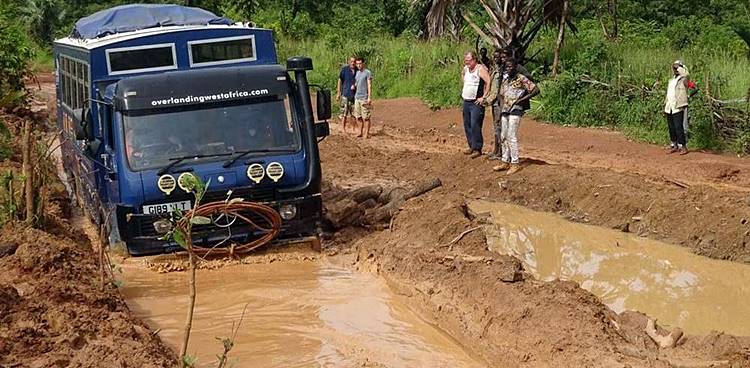
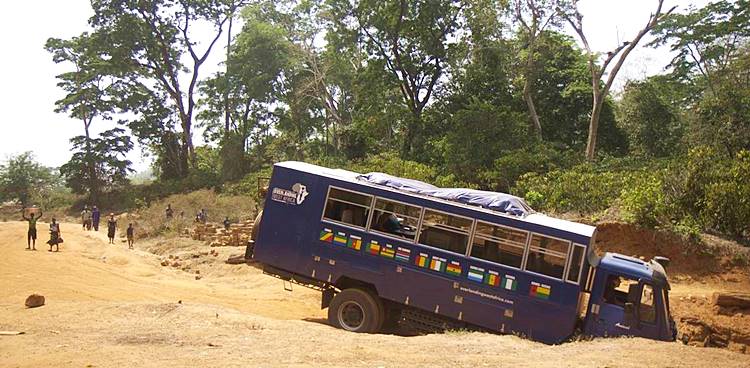
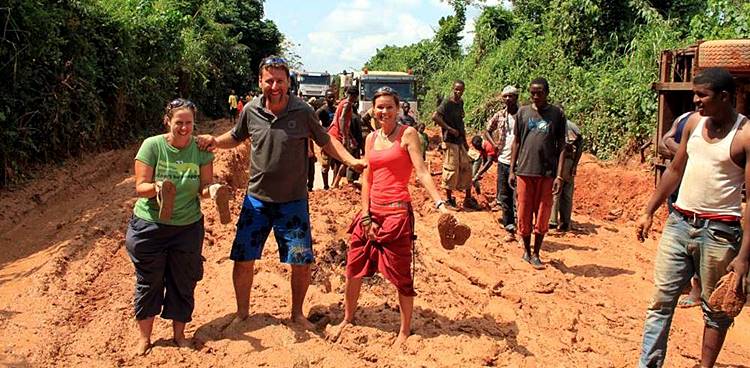
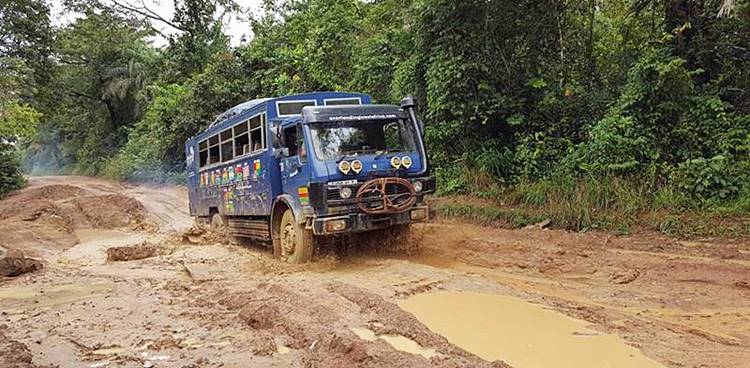
All itineraries are suggested only. Our routes are challenging and some parts will be exploratory so a flexible approach is absolutely essential. Delays and changes of plan do happen – they are part and parcel of overlanding through the ‘developing’ world where tourism is in its infancy. Be it bad weather, security issues, adverse road conditions, border closures, corrupt officials, bureaucracy, mechanical hiccups or out dated information, we will have to adapt our plans according to the circumstances. Please read the OVERLANDING: WHAT TO EXPECT section for more on this.
Is each trip run separately or will people be getting on and off?
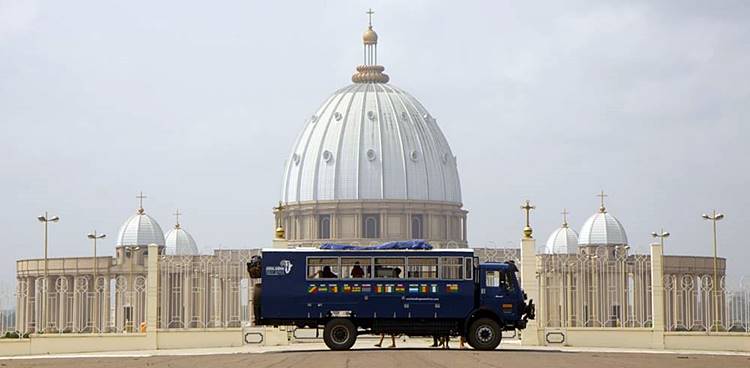
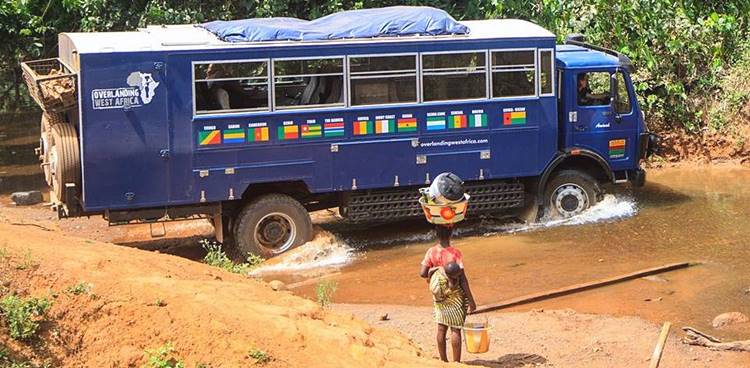
We have one truck and two crew. We operate 3 back-to-back trips from Senegal to Ghana (in a southbound direction) – have a short turnaround period to work on the truck – then start the 3 back-to-back trips from Ghana to Morocco (in a northbound direction).
Is it safe?
It is essential that you read the travel advice from the British Foreign & Commonwealth Office travel advice for the countries we intend to visit (or equivalent travel advice from your government). If you don’t feel comfortable with any of what you read then our trips are not for you. There are inherent risks associated with overland travel to some of the areas we intend to visit but bear in mind that the British FCO advice tends to be very cautious.
Am I suited to group travel?
We recognise that some of our travellers will have never been on a group trip before, and for some people it may seem like you’ll be ‘stuck with the group’ the whole time. You will inevitably spend a considerable amount of time together as a group but we do not attempt to instil a ‘group ethos’ by constantly arranging activities for the group to do as a whole. We recognise that people often want the freedom to do their own thing when they get the chance so our style and itineraries reflect this. We believe that passengers should have the freedom to go off and see what they want to see, not what we think they should see.
What about visas?
You are responsible for your own visas. We will advise which VISAS you need to obtain in advance and which ones we should be able to obtain en route. We will provide you with the necessary copies of our vehicle documentation/letters of guarantee/hotel confirmations etc in good time – it is then up to you to obtain the visas.
Will my passport cause issues with obtaining visas?
Nationalities outside of the European Union, Australia, New Zealand, USA and Canada should thoroughly research the visa application process for each country – and notify us as early as possible so that we can help advise as best as possible that all the visas are possible to obtain.
What about accommodation? Will I have to share?
The kitty price is based upon two people sharing a tent or room (when the kitty includes a hostel / hotel).
I’ve never camped before – is this for me?
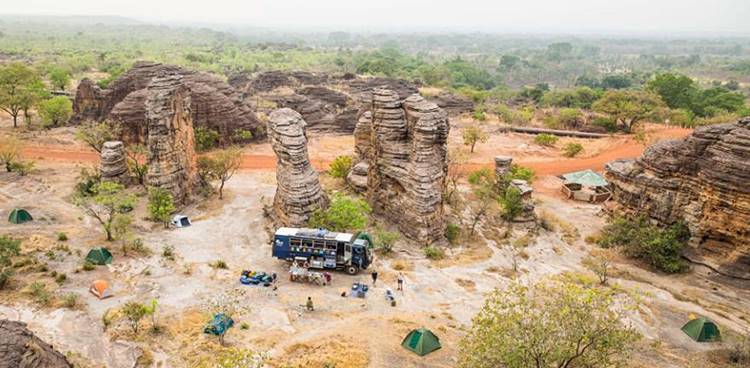
It doesn’t matter if you’ve never been camping before – what’s more important is your attitude. You’ll be camping the vast majority of the time so you’ll soon get the hang of it. We are fully equipped with sturdy tents that are easy to erect and we’ll help you out and show you how to put them up. The only thing you’ll need to bring along is a decent sleeping bag and ground mat – and pillow if you want one.
Do I need travel insurance?
Yes. Travel insurance is compulsory – and without it you will not be allowed to join the trip. It is your responsibility to arrange suitable adventure travel insurance for the duration of the trip, with benefits that cover personal accident, medical expenses, repatriation, cancellation & curtailment as well as loss and damage to personal effects. The policy should be appropriate for the countries you are visiting, and with a provider that is used to dealing with situations in challenging countries with limited infrastructure.
What is the ‘kitty’?
Please refer to our ‘Trip Price & Kitty Price Explained’ page for more information.
How much spending money should I bring?
In a lot of the countries we travel through the tourist industry is in its infancy so there isn’t too much to spend your money on. Having said that, we try to make our trips flexible to allow people to do what they want rather than making it too restrictive – so there will be opportunities for optional excursions/trips at most places we stop along the way.
What is the maximum size of the group?
What’s the usual group split in terms of sex, age and nationality?
In terms of nationality, the bulk of our passengers come from the UK, Australia, Canada, Germany, USA, New Zealand, the Netherlands, Sweden, Norway, Denmark, Ireland and Switzerland. We occasionally get passengers from Iceland, Japan, Spain, Greece, Italy, Brazil and South Africa.

What will the weather be like?
The weather will be predominantly hot and humid, with rainfall varying from short outbursts to heavy downpours. Weather graphs for West Africa are useful as a guide, but the rainy season is notoriously unpredictable in the region and can sometimes drag on longer than predicted (yep, climate change appears to be affecting West Africa on recent years!)
What about drinking water?
We encourage you to bring your own water bottle (Sigg or Nalgene bottles or something similar) to refill from the 300 litre water tank on the truck. We keep the drinking water tank topped up as we go and treat it with Micropur. Buying water in plastic bottles creates a huge amount of waste, and they often end up over the edge of a hill no matter how responsibly we think we have disposed of them, so we ask that you avoid buying bottled water in the region.
What first aid equipment and help is there?
The truck is equipped with a professionally compiled first aid kit and stocked with everything most people are likely to need on the road. The crew have completed a first aid course and are able to provide help and advice when necessary. However, we recommend that you bring your own first aid kit and only use the group kit if you are short of something. If you do need to use something from the group kit we will ask for it to be replaced.
How can I recharge electrical gadgets?
We have fitted leisure batteries for running the fridge, lighting and charging points. There are 2 cigarette lighter charge ports that provide 12 volt DC output (similar to what you have in your car, so you can charge camera batteries, mobile phones, MP3 players etc), and a 230 volt AC inverter with a UK 3 point socket for charging more power hungry units like laptop computers.
What guarantee do I have that you will not just run off with my money?
We are too small an operation to join the Association of Independent Tour Operators (AITO) and offer financial protection. But you can rest assured we have been operating as a UK registered business since 2010 and have a proven track record. We have invested a lot of money and a huge amount of our time, blood, sweat and tears in this venture to make it work. The overlanding industry is a small close-knit community and everyone knows us – so you don’t need to worry about us doing a runner! We are a UK registered limited liability company and have been successfully running trips since 2012.
I want to go, what do I do next?
Please fill out our Enquiry Form and we’ll get in touch. We can hold you a space on whatever trip(s) you are interested in and send through a booking form (and a medical questionnaire if required) for you to return to us with your deposit. Once we have all this we’ll confirm your place on the trip, and email you further information about the trip and visa procedures and more detailed advice on what to pack for the trip etc
Do I need to be physically fit?
There are plenty of opportunities on our trips to go walking so a reasonable level of fitness is necessary to really enjoy the trip. However, a positive attitude and an open mind are more important than being super-fit. Whilst any person that leads a normal, active life should be able to cope with the rigours of life on the road in West Africa – overlanding does require a degree of mental stamina/endurance!
What about my personal belongings and money?
The truck has a hidden lockable safe on board where you can leave your passport and money. This is entirely at your own risk – Overlanding West Africa takes no responsibility for any valuables put into the safe. However, please note that only the crew have the keys to the safe so it will be looked after.
What are the rest of the group like on the trip?
We can let you know a breakdown of passengers nationalities by sending us an email at info@overlandingwestafrica.com
How far ahead should I book?
It’s advisable to book most trips at least 6-8 months in advance to guarantee your place. The visa procedures for some of the countries we visit can take up to 3 months so you need to get organised well in advance.
I’m a vegetarian and/or have a specific dietary requirement – will I be catered for?
If you are a vegetarian, or have any other specific dietary requirements, please inform us when you make your booking. We will always do our best to cater for particular dietary needs. However, you need to be aware that in many of the countries we travel through the range of ingredients available can be extremely limited.
What type of luggage should I bring?
A conventional backpack/holdall is recommended for your stuff – 70 to 90 litres maximum weighing no more than 20kgs. You’ll be unpacking/packing pretty much every day so the easier it is to access the better. A ‘base camp’ style holdall with backpack straps is ideal but some people prefer a more conventional top loading backpack with access zips – it comes down to personal preference in the end.
Do you sell flights?
No. We are a ground transportation operator only and do not get involved in booking flights for you, they are entirely your own responsibility. Our only advice is that you book flights which are fully refundable, or that can be changed for a small fee, incase there be any issues with the trip/s.
What if I can’t cook?
Don’t worry – there’s always someone around who can help. Our trips are not a Michelin 3 star gourmet experience and most people are so hungry after being outdoors all day they won’t be too fussy! You will be in a group of either 2, 3 or 4 other passengers for cook duty, depending on the overall size of the group.
Where is the best place to get medical advice before travelling?
From your doctor or travel clinic. The internet is a good place to do some background research but DO NOT RELY ON IT. It is vital to seek professional medical advice well in advance of your trip. A good place to start researching is here: https://www.fitfortravel.nhs.uk/destinations
Do I need to take malaria prophylaxis?
We are not qualified to give you medical advice on what drugs you should take. You should therefore seek advice from your doctor or travel clinic, letting them know where you will be travelling. Please note that you will be in a high risk malaria zone for pretty much all of our trips, as per this website: https://www.fitfortravel.nhs.uk/destinations
What advice can you give me in regards to photography whilst on tour?
We ask that photos are taken with the utmost respect, as some of the local communities we pass through are camera shy and may not want their photo taken. There are also many areas where photos/video cameras are forbidden such as border posts, airports, military installations as well as some bridges, dams, historical sites and museums. Listen to the crew when they point these areas out otherwise you may lose your camera, get arrested or worse still get the whole group arrested.
For a general idea of what you need to bring this list provides a guide:
• A good quality sleeping bag (two season should be fine)
• A day pack for hiking, wandering around cities, etc. and also for keeping inside the truck for small everyday items (ie sun cream, book, water bottle etc)
• Head torch/flashlight with spare batteries & bulbs
• Passport photos (average of 2 per country for which visas will be applied for en route)
• Good quality reusable water bottle (at least 1 litre)
• A pouch or money belt worn inside your clothing, or unobtrusive pocket sewn into the inside of a pair of loose fitting trousers
• Travel towel
• Wash kit
• First aid kit
• 3 or 4 sets of comfortable travelling clothes (light, easily washable cotton clothes are best)
• 1 set of casual but smart clothes for evenings out. Women should bring a skirt that covers their knees and a scarf for visiting places of worship
• 2 pairs of shorts
• Sun hat or warm hat if trekking Warm sweater/fleece
• 1 waterproof jacket with hood
• 1 pair of comfortable walking shoes or boots (i.e. something with some kind of ankle support)
• 1 pair of sandals or flip-flops/thongs
• Swimwear
• 1 pair of sunglasses
• Clothes washing detergent, small scrubbing brush & washing line (just a length of cord)
• Alarm clock
• Pocket calculator (useful when exchanging money)
• Multi-purpose knife (if you are going to use it)
• Cotton sheet sleeping bag (or sheet folded and sewn up on 2 sides). It will help keep your sleeping bag clean, and can be used on its own on warm nights
• Mosquito net – though the tents supplied by us have mosquito netting your own net is useful for hotels/hostels and if you are sleeping out under the stars
• Toilet paper – 1 roll for emergency!